Brief update from today; PV charged the battery to 100%, so the 50% cap must just be when charging from the grid.
Had to force the export as Octopus did not enable it in time, but I noticed that Octopus DID enable it at some point.
Battery dropped to 19% during export before 7.00 PM
Now manually forcing an overnight charge (expecting it will cap at 50%)
No word from Octopus. GivEnergy tried to help but reminded us that our T&C with Octopus IF mean that they control the battery so GivEnergy can’t really do much.
GivEnergy did mention that it IS possible to remove permissions from the Portal: Account Settings → Security : Revoke access to services.
Though they advised; best talk to Octopus first (would probably be kicked off OIF + no idea if the Inverter Locking will also go)
Another point (I think mentioned elsewhere) using Using Home Assistant & Octopus IF at the same time might result is a “tug of war” between them, so if possible try to limit what changes are made using HA - good point NOT to use slot 1 in the schedules; Octopus WILL override the settings in this.
When charging the battery I dropped the charge rate to 2KW, this made a massive difference to Inverter temperature (dropped from 76C to 51C)
Since everyone seems perfectly happy to hand over their rights without question, I’ve decided to join in, it’s so much easier when you stop thinking for yourself. Who needs choice, transparency, or accountability when compliance is so much more convenient?
This is all great, but by over-riding the controls that Octopus have applied, you are now in breach of the terms that you signed up to, which give them “exclusive” control of your inverter.
Since everyone seems perfectly happy to hand over their rights without question, I’ve decided to join in, it’s so much easier when you stop thinking for yourself. Who needs choice, transparency, or accountability when compliance is so much more convenient?
I don’t work for Octopus and am not a legal specialist.
Just concerned that you may be interfering with Octopus’s ability to react to Demand Response Services, which can change at any time of day. You have not just signed up to allow them to adjust your inverter to suit your tariff, you have given them exclusive control 24 hours per day. The clause in the terms is one reason why I would NEVER sign up to the IOF tariff.
I’m just concerned that you and others who may follow your recommendations may be at risk of being removed from the tariff. To be clear, I hope the automations work well for you. Just pointing out the conflict with the terms. I have a similar issue with the Intelligent Octopus Go terms and the control of my EV.
Why not discuss your concerns about hammering the battery with 6kW charge / discharge rates? They might be open to / capable of operating at lower rates.
I don’t work for Octopus, and am not a legal specialist.
Maybe your system is an ‘outlier’ for the IOF algorithms. That’s quite a large system you have, compared to my more modest 3.6kW Inverter + 9.2kWh battery (+ 12x 400W PV panels). Maybe, much as you seem to like it, IOF is just not right for your system?
As a (totally selfish!) by-the-by:
One issue that I do have with IOF (and have banged-on about, at length, elsewhere) is the IOF > Givenergy messaging that results in frequent “Inverter Offline” & “Inverter Timeout” responses from GE. In the past 22 months on IOF, analysing the Inverter Remote Control Log, I’ve had:
30,801 (i.e. 48 per day) errors. Caused, exclusively, by Octopus “Enable ECO Mode”, and “Battery Reserve % Limit” messages.
15,806 (i.e. 24 per day) successful messages (that actually do something useful!).
I have been watching this topic with amazement. If you want to control the charging and discharging of your battery, then don’t sign up for Intelligent Octopus Flux! It’s not rocket science. This tariff is designed for users who don’t want the hassle of controlling their battery system.
If you do want to control your battery, there are other tariffs available. I am on Agile Octopus for import and Octopus Outgoing for export. I use MyEnergyOptimiser to control when my battery is charged and discharged and I monitor this at least a couple of times a day. Simple!
Also, after having problems with wifi connections to my inverters, I now have a rock solid connection using ethernet cables and powerline adapters. Again simple!
@ holdendyej Ah, that explains why I was seeing so many “Inverter Offline” timeouts compared to when I was on Octopus Cosy.
I suspect enabling the Real-Time Control option might help reduce the behaviour you’re describing (I haven’t tested this myself):
@donhall44 and anyone else asking the same question, the reason I’ve stayed on Intelligent Flux (except during winter) is simple:
My solar production starts around 05:00 and runs until about 20:30.
Unless I can charge the battery at <10p/kWh between 21:00–04:50, there’s no real benefit to switching tariff.
The only reason I purchased a GivEnergy system in the first place was because of Intelligent Flux, otherwise, I would have gone for a Tesla Powerwall, as GivEnergy customer support is practically non-existent.
My solar can fully charge the battery in about 2 hours, so daytime top-ups from the grid aren’t necessary.
For my setup, IOF still makes sense but hammering the battery does not.
I have no issue with enabling Real-Time Control, as a test. Have just set it.
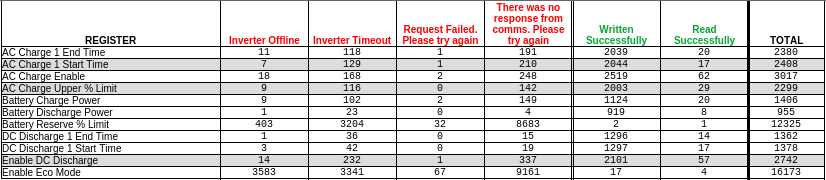
This table gives you a summary of the GE responses, to IOF messages that I’ve had since October 2022. As mentioned, errors seem to be initially triggered by “Enable Eco Mode” & “Battery Reserve % Limit” requests (of which Octopus send a lot).
I’ve even tested the “Enable Eco Mode” issue, by manually enabling it (quite a few times!) - the very first “Enable Eco Mode” message from Octopus, immediately afterwards, succeeds, thus setting Eco Mode OFF. Of course, subsequent messages throw errors…
Here’s a summary of all IOF-related messages, since Oct. '22:
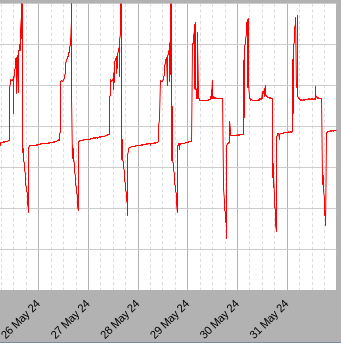
I do believe that, generally, the important messages do eventually get through (i.e. IOF repeats them), so my system behaves. Can’t be 100% sure, as the IOF algorithms (not surprisingly) change over time - it’s fairly easy to spot a IOF ‘upgrade’ E.g. this late-May 2024 Battery Voltage graph:
Having pointed out my concern that you might be in breach of the terms, I was going to leave it at that and let you apply your own interpretation. As you have tagged me, suggesting that I was extremely focused on the word “exclusive”, I’ll take the opportunity to explain why I think the word “exclusive” is so important and why I think your interpretation is wrong.
First of all, the word “exclusive” means excluding ALL others. In the context of the written terms, this means excluding all other parties apart from Octopus from controlling your inverter. This therefore excludes YOU as first party and all other third parties, including GivEnergy, which is why GivEnergy have refused to remove the lock from your system.
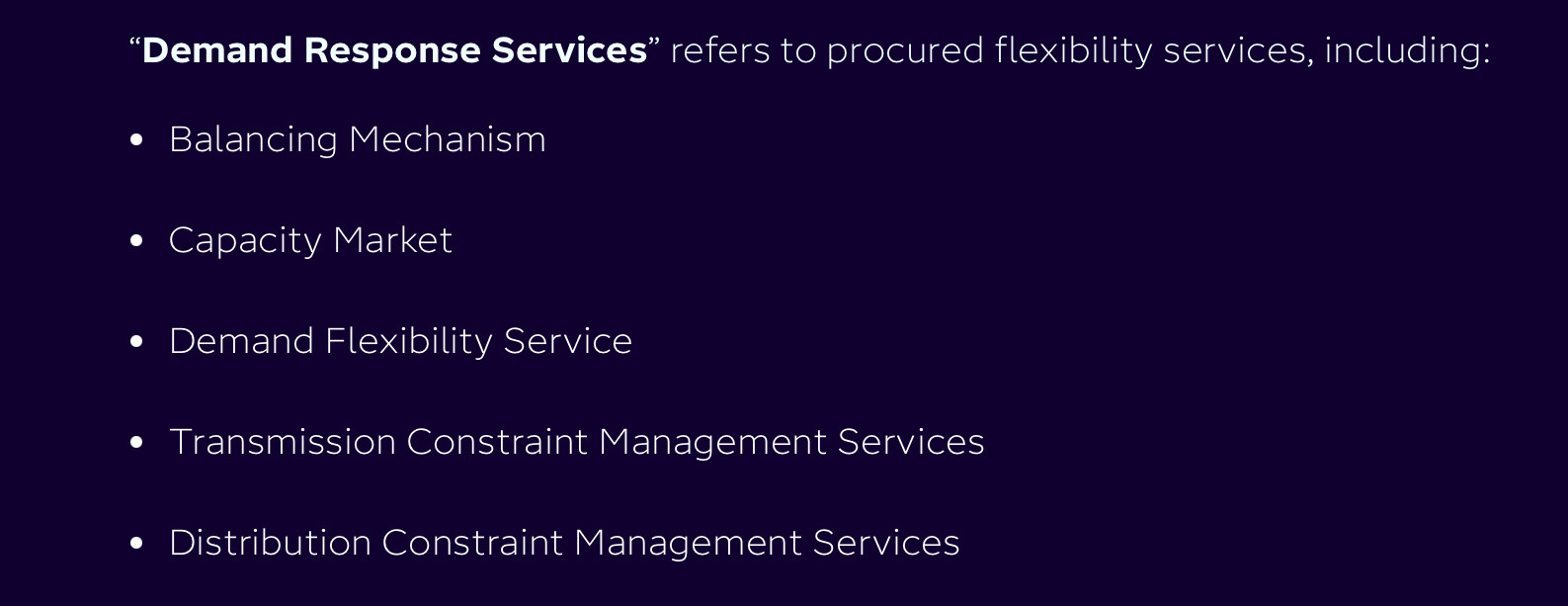
Next thing to consider is WHY Octopus want “exclusive” control of your inverter. This tariff is not just about making use of your battery / solar energy at the most efficient time, it is about making you part of a Virtual Power Plant. The idea is that Octopus know exactly how much capacity they have available at any moment, allowing them to sell this availability to the National Grid. The clause I posted earlier talks about Demand Response Services, which includes all of the services listed in the attached definition from the same terms. Any of these services can be called upon at any time of day. If participating customers pause / reduce their battery charge / discharge rate from those set by Octopus, this could result in the Virtual Power Plant failing to deliver the required capacity when there is a demand. This puts the National grid at risk. This is why Octopus apply the lock and is why the word “exclusive” is in the terms.
I think this discussion is worth having and I trust that you can now appreciate why “exclusive” control is so important. Note that I am not criticising you for applying these controls, but making you / others aware of the issue. I am sure that the National Grid will not fall over just because a few parameters are being tweaked, but it does raise a question about whether IOF is a suitable tariff for anyone feeling the need to adjust the settings. If you have HomeAssistant, this opens up the possibility of switching to more suitable tariffs!
@DREI - FWIW, the ‘Real-Time Control’ enabled has made no discernible difference (to the error frequency). I even did an Inverter Restart (and checked the ‘RTC’ enabled setting had persisted).
Im in no position to contest that, but what I can point out (which I`m sure you already are aware) is that you are, of course, running contrary to the spirit of the agreement.
Since everyone seems perfectly happy to hand over their rights without question, I’ve decided to join in, it’s so much easier when you stop thinking for yourself. Who needs choice, transparency, or accountability when compliance is so much more convenient?
Interesting discussion, which I’m happy to continue with as long as it remains amicable.
The definition of “Exclusive Rights” is clear and unambiguous. Only one party can have Exclusive Rights. This is what exclusive means. Prior to signing up to this tariff, YOU had exclusive rights to control your equipment. By signing up to this tariff, you GAVE Octopus the exclusive rights to control your equipment (clause 2.4.2.8.e). This means that YOU no longer have any rights to control your equipment. Octopus are therefore free to lock your equipment to prevent you or anyone else from changing settings which may interfere with their exclusive rights to control it.
I understand your frustration and possibly anger, but I’m afraid that this is the nature of the tariff that you have signed up to. Octopus want 100% control of your equipment and are offering you exceedingly good rates in return for you having 0% control.
P.S. I’m still not criticising you for applying the controls. That is your choice. I’m just discussing the nature of Intelligent tariffs and the cost of signing up to them.
In the “spirit” of Intelligent Flux, Octopus should not be locking system owners out entirely, nor altering settings that have no bearing on Demand Response (like Eco Mode or SoC limits).
As a hypothetical - if you are managing a virtual power plant which has a capacity of x megawatts, but the actual capacity is x percent lower because end users are modifying their individual configurations, that could well be an issue big enough to warrant doing something about.
That’s the overarching design principle which is fundamental to the discussion.
Modern LiFePO4 batteries are way more robust than this thread may infer. The terms of the battery warranty speak to that for sure. Economically, you’re way better off rinsing its capacity for net monetary gain, IMHO.
I can understnad the motives for doing this, however forcing control back from the utility undermines the operating model of these intelligent tarriffs. Its possible it could even lead to them being withdrawn entirely.
Octopus hold a fair chunk of responsiblity here - they have rolled out a product which is dependent on integrations which are simply unrealiable, and the (hopefully limited) response that has prompted in some of the more tech savvy customers shouldnt really be all that surprising.
TL;DR - If Intelligent Octopus isnt working or you dont like the real world implications of its use - leave and go on a traditional product until they work the kinks out. Forcing back control via technical workarounds causes more problems than you solve for the wider customer base.